Cold Plunge Chillers: How to Choose the Right Unit
By FrigePath . 9 min read . Updated June 2026
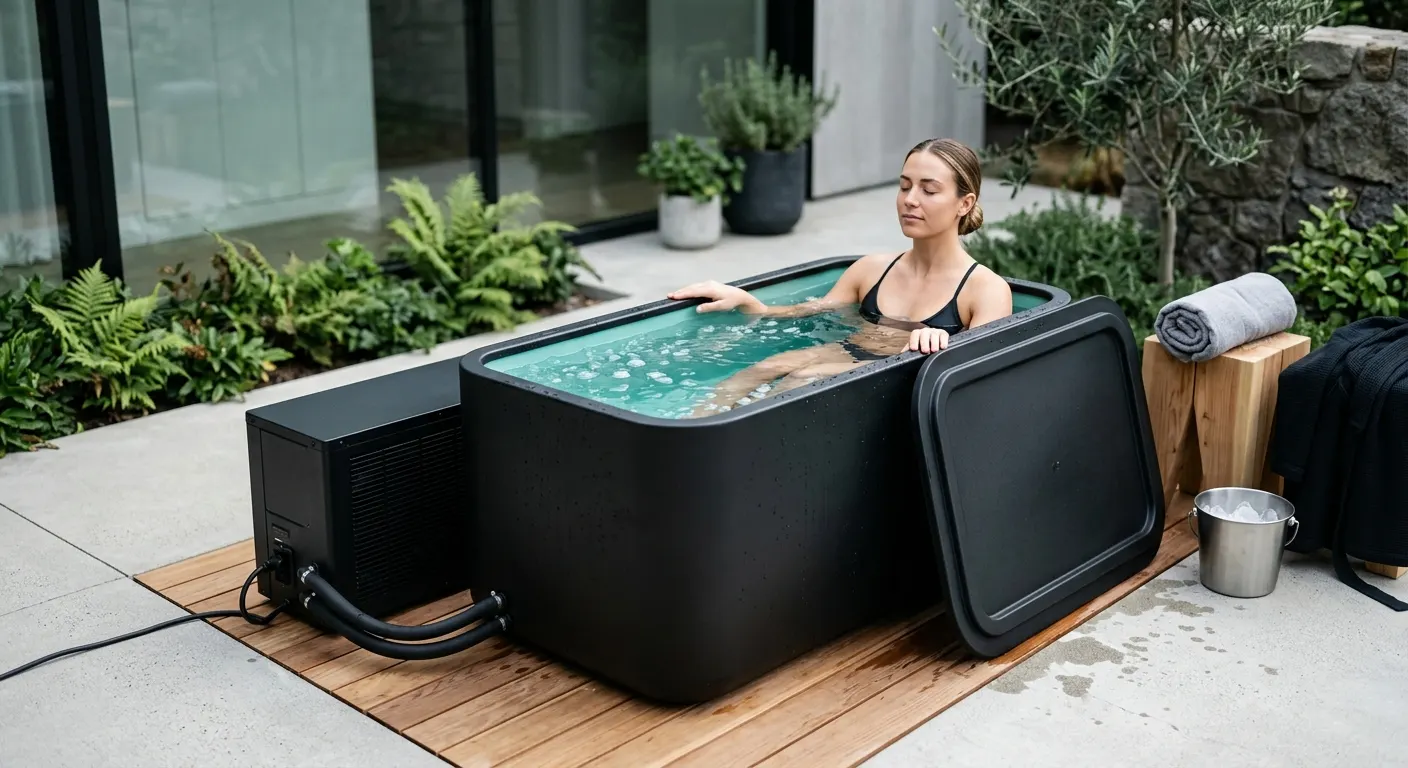
A cold plunge chiller is the upgrade that turns a tub you fill with ice into a tub that is always ready at your target temperature. The wrong size either never quite hits your goal temperature or costs more than necessary to run. This guide covers how to size a chiller correctly, what specs actually matter, the key differences between the Penguin Chillers Cold Therapy Chiller and the Plunge All-In Cold Plunge with Chiller all-in-one system, and how to connect a standalone chiller to any chiller-ready tub.
Quick answer
For most cold plunge tubs up to 100 gallons in a moderate climate, a three-quarter horsepower unit with a titanium heat exchanger is the right choice. The Penguin Chillers Cold Therapy Chiller is the benchmark standalone unit, while the turnkey Plunge All-In delivers app control and integrated ozone with no DIY hookup. Never undersize a chiller for a warm environment.
This guide contains affiliate links. FrigePath may earn a commission at no cost to you.
How to size a chiller for your tub
Chiller sizing depends on three variables: tub volume in gallons, ambient air temperature around the tub, and your target water temperature. For a tub under 80 gallons in a moderate climate (consistently under 85 degrees Fahrenheit ambient), the Penguin Chillers 1/2 HP Water Chiller at half horsepower is sufficient. For tubs of 80 to 120 gallons or setups in warm climates, step up to three-quarter horsepower minimum.
The most common sizing mistake is choosing based on the chiller's minimum achievable temperature without accounting for ambient heat load. A chiller that can technically reach 39 degrees in a cool garage may only reach 45 degrees outdoors in summer because it is working against both the tub's heat gain from warm air and direct sun. If your tub is outdoors in a hot climate, assume one size up from what the math suggests.
The Penguin Chillers Cold Therapy Chiller at 7,500 BTU is the benchmark standalone unit for tubs up to 120 gallons in moderate climates. Its titanium heat exchanger resists corrosion from bromine and other sanitizers better than copper-based exchangers in competing units, which is an important long-term durability difference in treated water.

Penguin Chillers 1/2 HP Water Chiller
A half-horsepower cold therapy water chiller with a titanium heat exchanger, suitable for smaller cold plunge tubs under 80 gallons, at a lower price than the three-quarter horsepower unit.
Penguin Chillers Cold Therapy Chiller
A 7,500 BTU cold therapy chiller with a titanium heat exchanger, built-in pump, and quick-connect hoses designed for DIY cold plunge installations. Made in Tennessee.
Standalone chiller versus all-in-one integrated system
A standalone chiller like the Penguin Chillers Cold Therapy Chiller pairs with a tub you already own or choose separately. The advantage is flexibility: you can match the best tub to the best chiller rather than being locked into a single brand's bundle. The Plunge Pro Chiller Standalone Unit is the exception: Plunge says to pair it exclusively with other Plunge products, and connecting it to non-Plunge devices voids the warranty. The trade-off is a DIY plumbing step, typically a 30 to 60 minute hose connection to the tub's inlet and outlet ports.
An all-in-one system like the Plunge All-In Cold Plunge with Chiller integrates the chiller, tub, filtration, and app control in a single engineered unit. There is no DIY hookup, no need to confirm port compatibility, and no risk of mis-sized components. The trade-off is price: all-in-one systems command a significant premium over a standalone chiller paired with a quality tub, and if one component needs service, the whole system is out of commission.
For buyers who already own a Plunge tub, the Plunge Pro Chiller Standalone Unit is the standalone version that reaches 37 degrees Fahrenheit and operates quietly. Plunge lists ozone sanitation and a 20-micron filter as part of the unit. Plunge says to pair it only with Plunge products, and connecting it to non-Plunge devices voids the warranty.
Penguin Chillers Cold Therapy Chiller
A 7,500 BTU cold therapy chiller with a titanium heat exchanger, built-in pump, and quick-connect hoses designed for DIY cold plunge installations. Made in Tennessee.
Plunge Pro Chiller Standalone Unit
A portable standalone chiller from Plunge reaching a minimum of 37 degrees Fahrenheit and operating quietly, with ozone sanitation and a 20-micron filter listed by Plunge. Plunge says to pair it only with Plunge products.
Plunge All-In Cold Plunge with Chiller
An integrated cold plunge tub and chiller system with smartphone app control, ozone filtration, and a quiet compressor that holds water to approximately 37 degrees Fahrenheit.
Connecting a standalone chiller to your tub
The Ice Barrel 300 Cold Plunge Tub has factory chiller ports, the Ice Barrel 400 Cold Plunge Tub needs Ice Barrel's separately sold conversion kit installed first, and the PLUNGE MAGIC XXL Inflatable Cold Plunge Tub is sold as water chiller compatible. Once the tub is ready, the connection process is: attach the chiller's water-out hose to the tub's water-in port and the chiller's water-in hose to the tub's water-out port using the quick-connect fittings supplied. Fill the tub before starting the chiller to prime the pump loop.
Once connected, open the air bleed valve on the chiller to purge trapped air from the hose loop. When water flows steadily from the bleed port, close it. Power on the chiller, set the target temperature, and allow three to six hours for the first cool-down from ambient tap temperature to your target. Subsequent cool-downs after a plunge are faster because the water is already cold.
Keep the tub covered between sessions with the 3-Layer Insulated Cold Plunge Tub Cover with UV Reflective Layer or the PolarMonkeys Insulated Cold Plunge Tub Cover to reduce the heat gain the chiller has to overcome. Owners who add a quality insulated cover report noticeably shorter chiller run cycles, which reduces electricity cost and extends compressor life.

Ice Barrel 400 Cold Plunge Tub
The upright barrel that made at-home cold plunging mainstream: UV-stabilized, chiller-upgradeable with a separately sold conversion kit, and backed by a lifetime warranty. Fits most adults to 6 foot 6 and holds 105 gallons in a 45-inch upright design.
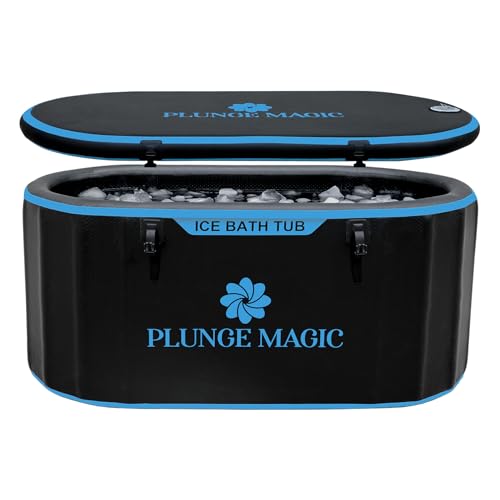
PLUNGE MAGIC XXL Inflatable Cold Plunge Tub
An elongated inflatable cold plunge tub measuring 59 by 31 by 30 inches, designed for taller users who cannot fit comfortably in upright barrels.

3-Layer Insulated Cold Plunge Tub Cover with UV Reflective Layer
A 32.5-inch round insulated cover with three insulation layers and a UV-reflective silver outer surface, a zip closure with buckle straps, and a 30.5-inch height for use with upright barrels.

PolarMonkeys Insulated Cold Plunge Tub Cover
A brand-focused insulated cold plunge cover designed for third-party and DIY cold plunge builds, with thick foam insulation and a cinch-strap closure system recommended for high-usage setups.
Chiller maintenance and what to watch for
The primary maintenance task is cleaning the filter on the chiller's filter loop. Penguin Chillers says to check and clean its filters about once a week; for other chillers, follow the maker's schedule. A clogged filter, including a loaded Universal 20-Micron Filter Cartridge for Cold Plunge Chillers in a housing that takes one, restricts flow, forces the pump to work harder, and can cause the compressor to cycle more frequently to maintain temperature.
Check the hose connections quarterly for any drip at the quick-connect fittings. Cold temperature cycling causes slight expansion and contraction in hose materials, and fittings that were snug at installation can develop minor looseness over time. A drip at a fitting is almost always fixed by hand-tightening the collar ring one quarter turn.
Keep the chiller's air intake and condenser coil clear of leaves, dust, and debris. An outdoor unit should have at least 12 inches of clear air space on all sides. A restricted condenser runs warmer, struggles to reach target temperatures in summer, and wears the compressor faster.

Universal 20-Micron Filter Cartridge for Cold Plunge Chillers
Standard 20-micron replacement filter cartridges for cold plunge chiller filter housings, recommended for replacement every three to four weeks under daily use. Confirm the housing size and your chiller maker's filter spec before ordering.
Featured in this guide
Penguin Chillers Cold Therapy Chiller
A 7,500 BTU cold therapy chiller with a titanium heat exchanger, built-in pump, and quick-connect hoses designed for DIY cold plunge installations. Made in Tennessee.
Penguin Chillers 1/2 HP Water Chiller
A half-horsepower cold therapy water chiller with a titanium heat exchanger, suitable for smaller cold plunge tubs under 80 gallons, at a lower price than the three-quarter horsepower unit.
Plunge All-In Cold Plunge with Chiller
An integrated cold plunge tub and chiller system with smartphone app control, ozone filtration, and a quiet compressor that holds water to approximately 37 degrees Fahrenheit.
Plunge Pro Chiller Standalone Unit
A portable standalone chiller from Plunge reaching a minimum of 37 degrees Fahrenheit and operating quietly, with ozone sanitation and a 20-micron filter listed by Plunge. Plunge says to pair it only with Plunge products.
3-Layer Insulated Cold Plunge Tub Cover with UV Reflective Layer
A 32.5-inch round insulated cover with three insulation layers and a UV-reflective silver outer surface, a zip closure with buckle straps, and a 30.5-inch height for use with upright barrels.
Keep reading
Related comparisons
Related roundups
FAQ
Frequently asked questions
What size chiller do I need for a 100-gallon cold plunge tub?+
For a 100-gallon tub in a moderate climate, a three-quarter horsepower unit rated at 7,000 to 8,000 BTU is the right baseline. In warm outdoor environments where ambient air temperature regularly exceeds 85 degrees Fahrenheit, size up to one horsepower to ensure the chiller can reach your target temperature and hold it during a plunge.
How long does it take a chiller to cool a cold plunge tub?+
From room-temperature tap water at roughly 65 to 70 degrees Fahrenheit, a correctly sized chiller takes three to six hours to reach a target of 50 to 55 degrees. A covered, well-insulated tub cools faster than an uncovered one. After a plunge session that adds body heat, recovery back to target temperature typically takes 30 to 90 minutes depending on chiller size and ambient conditions.
Do I need to add any chemicals if my chiller has a built-in filter?+
Yes. A mechanical filter removes particles but does not kill bacteria or viruses. You still need a sanitizer layer, whether that is bromine tablets, a copper and silver ion treatment, or an ozone generator. Many premium all-in-one chillers ship with integrated ozone that handles pathogen kill automatically, but standalone chillers with a basic filter loop still need a chemical or ozone treatment to maintain sanitary water.